Comprehensive Guide: How to Choose the Right Car for Your Family in Saudi Arabia 2026
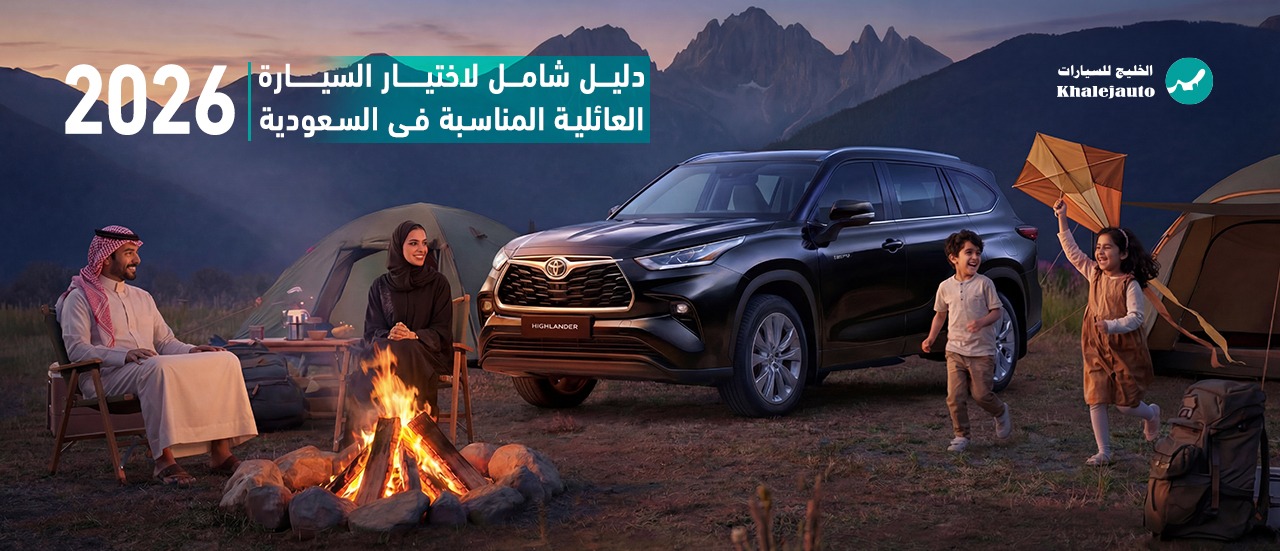
Choosing the right family car is a decision that shouldn't be rushed. The car that will carry your family every day between school, work, and family visits — and can take you on weekend trips — deserves careful consideration before purchasing. In this guide, we take you step by step to choose the best family car that suits your needs and driving conditions in Saudi Arabia.
At Khalej Auto, with over 40 years of experience in the Saudi market as an authorized dealer for Toyota, Hyundai, Nissan, Kia, Ford, and Lexus, we've compiled all the criteria you should consider before making a purchase decision.
Why Is Choosing a Family Car Different from a Personal Car?
A personal car may focus on performance, sporty design, or speed, but a family car is an entirely different equation. Here, the priority is safety, comfort, and economy above all else. The car that carries your children daily must be:
Safe by international standards (Euro NCAP or IIHS)
Spacious enough to accommodate 5–7 passengers with their luggage
Fuel-efficient, especially with rising fuel prices
Reliable in maintenance, because any unexpected breakdown means the entire family is stranded
Comfortable for long trips, especially to Makkah, Madinah, and other cities
7 Essential Criteria for Choosing a Family Car in Saudi Arabia
1. Safety First – Non-Negotiable Safety Standards
When looking at any family car, ensure the following features are available at minimum: Anti-lock Braking System (ABS), Electronic Stability Control (ESC), at least 6 airbags, ISOFIX child seat anchoring system, and a rear camera. Modern cars add more features such as forward distance alert, blind spot monitoring, and automatic emergency braking.
💡 Khalej Auto Tip: Look for 5-star ratings in Euro NCAP or ANCAP tests. Cars like the Toyota Land Cruiser, Hyundai Santa Fe, and Nissan Patrol receive excellent safety ratings.
2. Interior Space and Seating Capacity
If your family has more than 3 children, you need a 7-seater. Cars like the Toyota Highlander, Hyundai Palisade, and Nissan Patrol offer comfortable third-row seats with ample cargo space. However, if your family is smaller (2–3 children), a 5-seater like the Toyota RAV4, Hyundai Tucson, or Kia Sportage will be sufficient and more economical.
3. Fuel Consumption and Economic Efficiency
With rising fuel prices, efficiency has become a decisive factor. Hybrid cars like the Toyota Camry Hybrid and Lexus ES 300h offer excellent fuel efficiency of up to 20 km/L in the city. If you drive long daily distances, annual fuel savings can amount to thousands of riyals.
4. Adapting to Saudi Arabia's Hot Climate
Saudi summers are harsh on cars. You need a vehicle designed to withstand temperatures exceeding 50°C. Make sure it has: a powerful and fast-cooling A/C system, good thermal insulation for the glass, an efficient engine cooling system, and ventilated seats (in higher trims). Japanese and Korean cars are known for their durability in Gulf climates because they are manufactured with specifications tailored for the Gulf region (GCC Specifications).
5. Maintenance Costs and Spare Parts Availability
A car with a low purchase price but high maintenance costs will end up costing you more in the long run. The most economical brands for maintenance in Saudi Arabia are: Toyota (cheapest and easiest to maintain), Hyundai and Kia (good spare parts availability at reasonable prices), and Nissan (generally economical). In contrast, European luxury cars and American cars can cost double the maintenance of Japanese and Korean vehicles.
💡 Khalej Auto Tip: If you want to balance luxury with easy maintenance, consider Lexus — Japanese luxury with Toyota-level maintenance. Available at Khalej Auto in a variety of models.
6. Entertainment and Children's Comfort
Children need special entertainment options on long trips. Useful features include: rear screens (in some luxury models), multiple USB ports, independent rear A/C, and enough storage space for children's toys and school bags.
7. Resale Value
Japanese brands, especially Toyota and Lexus, retain their value better than others. A Toyota Camry, for example, loses about 30% of its value after 5 years, while some European cars lose up to 50%. If you plan to change your car after 4–5 years, investing in a Japanese-made vehicle is a smart financial decision.
Family Car Budget Guide
Before you start searching, define your budget precisely. The basic financial rule: total monthly car cost (installment + insurance + fuel + maintenance) should not exceed 15% of your net monthly income.
Suggested budget categories:
Economy budget (SAR 60,000–80,000): Hyundai Tucson, Kia Sportage, Nissan X-Trail
Mid-range budget (SAR 80,000–150,000): Toyota RAV4, Toyota Camry, Hyundai Santa Fe
High budget (SAR 150,000–300,000): Toyota Highlander, Hyundai Palisade, Lexus RX
Luxury budget (SAR 300,000+): Toyota Land Cruiser, Nissan Patrol, Lexus LX
Note: Khalej Auto offers flexible financing and installment options in partnership with leading Saudi banks. Check the latest available offers to choose the plan that fits your budget.
Frequently Asked Questions
What is the best economical family car in Saudi Arabia?
The Toyota Camry and Hyundai Sonata are among the best economical options, combining a reasonable price, fuel economy, and low maintenance costs. In the SUV category, the Kia Sportage and Hyundai Tucson offer good family space at competitive prices.
Should I choose a hybrid car for my family?
Yes, if you drive more than 1,000 km per month. Hybrid cars like the Toyota Camry Hybrid and Lexus ES 300h save up to 40% on fuel consumption compared to conventional vehicles. Fuel savings offset the price difference in approximately 3–4 years.
How much should I spend on family car insurance?
Comprehensive insurance for a family car in Saudi Arabia ranges from 2% to 5% of the car's value annually. For a car worth SAR 100,000, expect SAR 2,000–5,000 per year. Influencing factors: car year, brand, driver's age, and driving history.
What is the difference between GCC specs and other specs?
GCC Specification vehicles (GCC Specs) are specifically designed to withstand high temperatures: a more powerful cooling system, better thermal insulation, and UV-resistant materials. Avoid purchasing cars with American or Japanese specs as they may not withstand Saudi summers, and their warranty may not cover parts manufactured for hot climates.
Conclusion
Choosing the right family car depends on a careful balance between your family's needs, your budget, and your lifestyle. Most importantly, don't rush the decision — test drive more than one car, compare options, and ask for opinions from owners of the same model.
At Khalej Auto, we welcome you to visit one of our two branches in Jeddah to explore our wide selection of family cars from the world's best brands. Our specialized team is ready to help you choose the car that perfectly suits your family, with flexible financing and installment options.


'%3e%3cpath%20id='Vector'%20d='M10%201.80078C12.6719%201.80078%2012.9883%201.8125%2014.0391%201.85937C15.0156%201.90234%2015.543%202.06641%2015.8945%202.20313C16.3594%202.38281%2016.6953%202.60156%2017.043%202.94922C17.3945%203.30078%2017.6094%203.63281%2017.7891%204.09766C17.9258%204.44922%2018.0898%204.98047%2018.1328%205.95312C18.1797%207.00781%2018.1914%207.32422%2018.1914%209.99219C18.1914%2012.6641%2018.1797%2012.9805%2018.1328%2014.0313C18.0898%2015.0078%2017.9258%2015.5352%2017.7891%2015.8867C17.6094%2016.3516%2017.3906%2016.6875%2017.043%2017.0352C16.6914%2017.3867%2016.3594%2017.6016%2015.8945%2017.7813C15.543%2017.918%2015.0117%2018.082%2014.0391%2018.125C12.9844%2018.1719%2012.668%2018.1836%2010%2018.1836C7.32813%2018.1836%207.01172%2018.1719%205.96094%2018.125C4.98438%2018.082%204.45703%2017.918%204.10547%2017.7813C3.64063%2017.6016%203.30469%2017.3828%202.95703%2017.0352C2.60547%2016.6836%202.39063%2016.3516%202.21094%2015.8867C2.07422%2015.5352%201.91016%2015.0039%201.86719%2014.0313C1.82031%2012.9766%201.80859%2012.6602%201.80859%209.99219C1.80859%207.32031%201.82031%207.00391%201.86719%205.95312C1.91016%204.97656%202.07422%204.44922%202.21094%204.09766C2.39063%203.63281%202.60938%203.29688%202.95703%202.94922C3.30859%202.59766%203.64063%202.38281%204.10547%202.20313C4.45703%202.06641%204.98828%201.90234%205.96094%201.85937C7.01172%201.8125%207.32813%201.80078%2010%201.80078ZM10%200C7.28516%200%206.94531%200.0117187%205.87891%200.0585938C4.81641%200.105469%204.08594%200.277344%203.45313%200.523438C2.79297%200.78125%202.23438%201.12109%201.67969%201.67969C1.12109%202.23438%200.78125%202.79297%200.523438%203.44922C0.277344%204.08594%200.105469%204.8125%200.0585938%205.875C0.0117188%206.94531%200%207.28516%200%2010C0%2012.7148%200.0117188%2013.0547%200.0585938%2014.1211C0.105469%2015.1836%200.277344%2015.9141%200.523438%2016.5469C0.78125%2017.207%201.12109%2017.7656%201.67969%2018.3203C2.23438%2018.875%202.79297%2019.2188%203.44922%2019.4727C4.08594%2019.7188%204.8125%2019.8906%205.875%2019.9375C6.94141%2019.9844%207.28125%2019.9961%209.99609%2019.9961C12.7109%2019.9961%2013.0508%2019.9844%2014.1172%2019.9375C15.1797%2019.8906%2015.9102%2019.7188%2016.543%2019.4727C17.1992%2019.2188%2017.7578%2018.875%2018.3125%2018.3203C18.8672%2017.7656%2019.2109%2017.207%2019.4648%2016.5508C19.7109%2015.9141%2019.8828%2015.1875%2019.9297%2014.125C19.9766%2013.0586%2019.9883%2012.7188%2019.9883%2010.0039C19.9883%207.28906%2019.9766%206.94922%2019.9297%205.88281C19.8828%204.82031%2019.7109%204.08984%2019.4648%203.45703C19.2188%202.79297%2018.8789%202.23438%2018.3203%201.67969C17.7656%201.125%2017.207%200.78125%2016.5508%200.527344C15.9141%200.28125%2015.1875%200.109375%2014.125%200.0625C13.0547%200.0117188%2012.7148%200%2010%200Z'%20fill='%2390A3BF'/%3e%3cpath%20id='Vector_2'%20d='M10%204.86328C7.16406%204.86328%204.86328%207.16406%204.86328%2010C4.86328%2012.8359%207.16406%2015.1367%2010%2015.1367C12.8359%2015.1367%2015.1367%2012.8359%2015.1367%2010C15.1367%207.16406%2012.8359%204.86328%2010%204.86328ZM10%2013.332C8.16016%2013.332%206.66797%2011.8398%206.66797%2010C6.66797%208.16016%208.16016%206.66797%2010%206.66797C11.8398%206.66797%2013.332%208.16016%2013.332%2010C13.332%2011.8398%2011.8398%2013.332%2010%2013.332Z'%20fill='%2390A3BF'/%3e%3cpath%20id='Vector_3'%20d='M16.5391%204.66013C16.5391%205.32419%2016%205.85935%2015.3398%205.85935C14.6758%205.85935%2014.1406%205.32028%2014.1406%204.66013C14.1406%203.99606%2014.6797%203.46091%2015.3398%203.46091C16%203.46091%2016.5391%203.99997%2016.5391%204.66013Z'%20fill='%2390A3BF'/%3e%3c/g%3e%3cdefs%3e%3cclipPath%20id='clip0_148_13441'%3e%3crect%20width='20'%20height='20'%20fill='white'/%3e%3c/clipPath%3e%3c/defs%3e%3c/svg%3e)
'%3e%3cpath%20id='Vector'%20d='M10%200C4.4772%200%200%204.4772%200%2010C0%2014.6896%203.2288%2018.6248%207.5844%2019.7056V13.056H5.5224V10H7.5844V8.6832C7.5844%205.2796%209.1248%203.702%2012.4664%203.702C13.1%203.702%2014.1932%203.8264%2014.6404%203.9504V6.7204C14.4044%206.6956%2013.9944%206.6832%2013.4852%206.6832C11.8456%206.6832%2011.212%207.3044%2011.212%208.9192V10H14.4784L13.9172%2013.056H11.212V19.9268C16.1636%2019.3288%2020.0004%2015.1128%2020.0004%2010C20%204.4772%2015.5228%200%2010%200Z'%20fill='%2390A3BF'/%3e%3c/g%3e%3cdefs%3e%3cclipPath%20id='clip0_148_13439'%3e%3crect%20width='20'%20height='20'%20fill='white'/%3e%3c/clipPath%3e%3c/defs%3e%3c/svg%3e)


